
 English




Epoxy resin is a linear thermoplastic molecule. It can only demonstrate excellent mechanical properties, heat resistance, and electrical insulation after undergoing a crosslinking reaction with a curing agent to form a three-dimensional network structure. The choice of curing agent directly determines the curing process conditions and the final performance of the product, making it the most critical component in the formulation system.
I. Classification of Epoxy Resin Curing Agents
Based on chemical composition and curing mechanisms, they are mainly classified into the following categories:
Amine Curing Agents: Including aliphatic amines, cycloaliphatic amines, aromatic amines, and polyamides. They exhibit high reactivity and can cure at room temperature or medium temperatures, yielding products with good toughness. However, some varieties have strong volatility and relatively high toxicity.
Anhydride Curing Agents: Requiring medium-to-high temperature curing (80°C–200°C), the cured products exhibit excellent heat resistance and dielectric properties, and are commonly used in electrical insulation materials. However, they require longer curing times and are sensitive to humidity.
Phenolic Resin Curing Agents: Featuring high curing temperatures, the cured products offer outstanding heat resistance and chemical corrosion resistance, and are primarily used in copper-clad laminates and high-temperature-resistant composite materials.
Latent Curing Agents: They remain inert when mixed with epoxy resin at room temperature and only initiate curing upon external stimuli such as heating or UV light, enabling one-component epoxy systems.
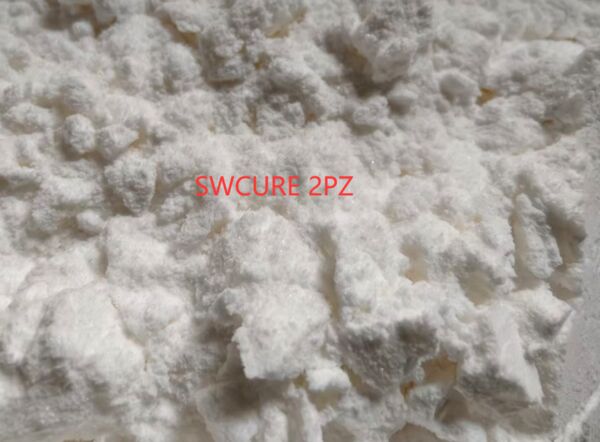
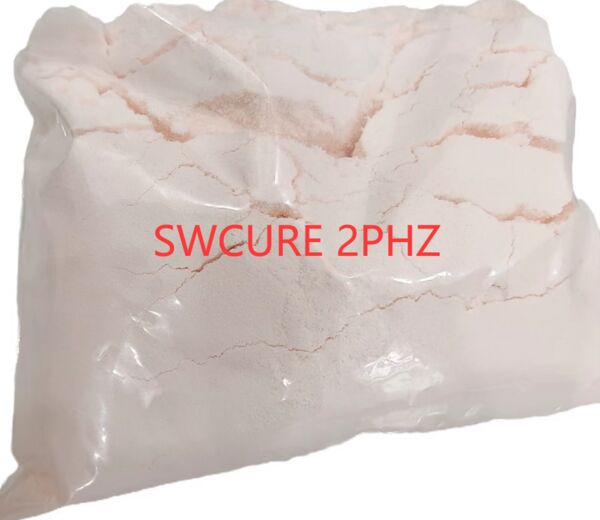
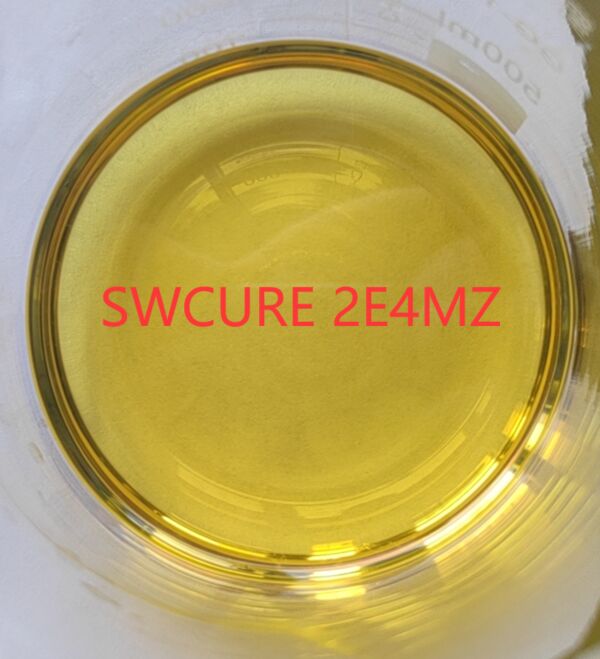
Imidazole Derivatives Curing Agents: As medium-temperature latent curing agents, they combine excellent latency, fast curing capability, and superior final product performance.
II. Technical Advantages of Imidazole Derivatives Curing Agents
Imidazole derivatives curing agents provide a long working window at room temperature while enabling rapid curing upon heating, and the cured products exhibit outstanding mechanical properties and thermal stability.
Curing Mechanism: They follow an anionic ring-opening polymerization mechanism. The active nitrogen atoms on the imidazole ring first attack the epoxy groups, followed by a chain reaction to efficiently build a three-dimensional crosslinking network. By introducing different substituents through molecular design, the reactivity can be precisely controlled to flexibly suit various processing requirements.
Key Advantages:
Excellent Latency: Pot life at room temperature can last from several days to several months, offering great convenience for one-component systems;
Rapid Curing at Medium Temperatures: Curing can be quickly initiated within the range of 80°C–180°C, balancing energy efficiency and productivity;
Superior Product Performance: The cured products exhibit a high glass transition temperature (Tg), excellent heat resistance, chemical resistance, and dielectric insulation properties;
Diverse Physical Forms: Available in various forms such as liquids and powders, suitable for different application scenarios including adhesives, powder coatings, composite materials, and electronic encapsulation.
III. Application Prospects
With the rapid development of strategic emerging industries such as electronics and electrical equipment, new energy vehicles, aerospace, and wind power generation, higher comprehensive performance requirements are being placed on epoxy resin systems. Imidazole derivatives curing agents, with their unique combination of latency and performance balance, are becoming an important technical pathway for driving material upgrades in